About Leadership Advisors Directions Join us

Research at Valka AI

The ValkaAI research team is a multidisciplinary, talent-dense group of over 20 world-class scientists and engineers. We tackle problems that have never been solved before, spanning photorealistic neural rendering, generative audio, human motion modeling, and world models.

“We do not feed on easy problems!”
Our mission is to pursue challenges that require moving far beyond the current state-of-the-art; we focus exclusively on deeply difficult problems that, once solved, deliver immense practical and product impact.

Research Leadership

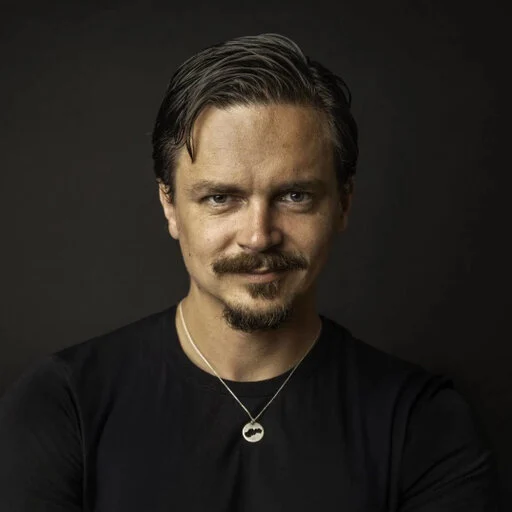
Ondrej Texler

Ondrej Texler

Head of Research

10+ papers · 15+ patents

  • PhD, CTU in Prague
  • ex-HeyGen · ex-ComfyUI · ex-Samsung
  • Los Angeles, CA
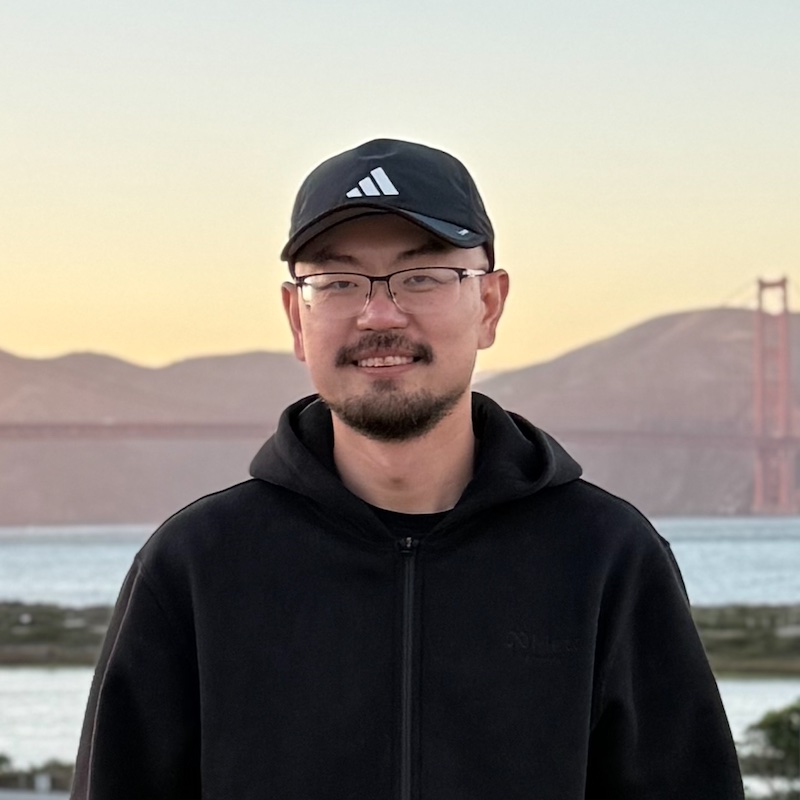
Weipeng Xu

Weipeng Xu

Principal Research Scientist

11k+ citations · h-index 34

  • PhD, Beijing Institute of Technology
  • ex-Meta · ex-Max Planck
  • Pittsburgh, PA
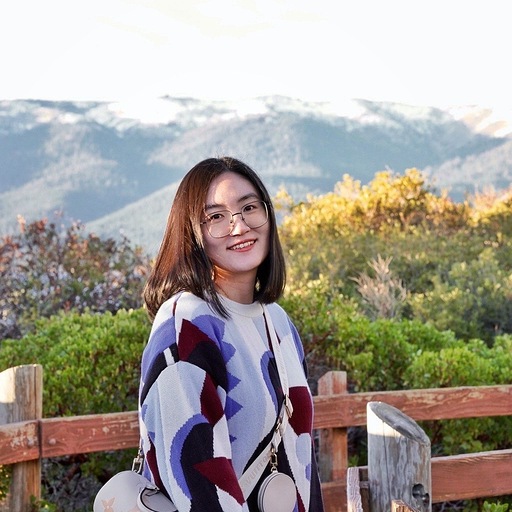
Yifan Wang

Yifan Wang

Lead Research Scientist

2× IEEE TVCG

  • PhD, Wayne State University
  • ex-Samsung
  • Sunnyvale, CA
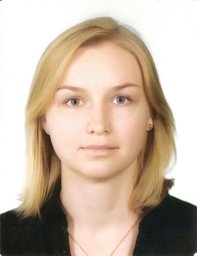
Ekaterina Egorova

Ekaterina Egorova

Lead Research Scientist

10+ papers

  • PhD, Brno University of Technology
  • ex-Seznam.cz
  • Prague, Czechia

Academic Advisors & Collaborators

Lukas Tencer

Lukas Tencer

Research Advisor

  • ex-Director at Google
    ex-Director at Twitch
  • San Francisco, CA
Prof. Yajie Zhao

Prof. Yajie Zhao

University collaboration

  • Director of the Vision and Graphics Lab (VGL) at USC
  • Los Angeles, CA

Research Directions

Human-centric Video Rendering via DiT

Diffusion-Transformer-based synthesis of photorealistic human video with pixel-precise spatial conditioning.

3 patents pending

Human Motion Modeling

Generative modeling of full-body motion, with emphasis on hand–object interaction.

1 patent pending

Facial Expression Control

Fine-grained, disentangled control of facial expressions in synthesized portrait video.

1 patent pending

World Models

Long-horizon simulation of complex, multi-agent dynamics via world-model concepts.

Emotion-enabled Text-to-Speech

Expressive speech synthesis with explicit control over emotion and prosody.

1 patent pending

Join us

ValkaAI’s research team strives for research efficiency and talent density.

As we continuously explore new research avenues, our team is growing. We are always looking for exceptional researchers for full-time and internship roles, and actively seek research collaborations with top U.S. universities.

How to apply

Send a short note about yourself, the role you're interested in, and a link to your CV, Google Scholar, or GitHub.

ondrej.texler@valka.ai

Open roles

Research Scientist – World Models (Video Understanding and Rendering)

Intern · Remote within US & Canada

Key responsibilities

  • Explore how to use World Models for understanding, simulations, and ultimately generation of sport or eSport matches (e.g., soccer, DOTA).
  • Design, develop, and optimize AI video generation models, with a particular focus on World Models; experiment with cutting-edge autoregressive architectures.
  • Develop and implement state-of-the-art algorithms for synthesizing sport matches.
  • Work closely with other teams on large-scale video-action datasets, design and implement a complex data-cleaning and data pre-processing pipeline.
  • Define robust validation strategies and implement custom evaluation metrics comparing synthetic vs. real gameplay.
  • Stay on the bleeding edge of the relevant literature, e.g., CVPR, NeurIPS, ICML, ICCV, and help to align it with our roadmap.

Required qualifications

  • Pursuing or having PhD in Computer Vision, Machine Learning, or a closely related field.
  • Published at top Computer Vision, AI, or Graphics venues (e.g., CVPR, ICML, ICCV, SIGGRAPH, NeurIPS).
  • Demonstrated hands-on experience with building and running generative CV models (e.g., GANs, DiT, VAE).
  • Solid understanding of neural architectures and paradigms (e.g., Transformers, Denoising Diffusion Models, RNNs, Sequence Models, CNNs).
  • Solid understanding of VAEs (e.g., ELBO).
  • Basic understanding of Reinforcement Learning.
  • Proficiency in Python and PyTorch.

Research Scientist – Sequence Modeling (World Models)

Intern · Remote within US & Canada

Key responsibilities

  • Develop models for real-game simulations for esports (e.g., CS2, Dota2, LoL) as well as classical sports (e.g., soccer).
  • Model generating of long-horizon complex sequence of game events.
  • Explore various ML techniques (Transformers, AR-based techniques, RL, or other sequence modeling methods).
  • Focus research on realistic player behavior, team dynamics, and overall match flow.
  • Define robust validation strategies to compare synthetic gameplay against real match data and build custom evaluation metrics.
  • Handle large datasets, build efficient training and inference pipelines.
  • Stay on the bleeding edge of the relevant literature, e.g., NeurIPS, ICML, ICLR, and help to align it with our roadmap.

Required qualifications

  • Pursuing or having PhD in Computer Vision, Machine Learning, or a closely related field.
  • Demonstrated hands-on experience with sequence modeling.
  • Strong research background in NLP or sequence modeling demonstrated by having publications at top tier conferences such as NeurIPS, ICML, ICLR, CVPR, or ICCV.
  • Proficiency in Python and PyTorch.
  • Solid understanding of neural architectures or paradigms (CNNs, Transformers, diffusion models, autoregressive models etc.).

Research Scientist – Sports Simulation

Intern · Remote within US & Canada

Key responsibilities

  • Design, develop, and optimize 3D and 4D models for realistic simulation of sports matches, including players, equipment, playing surfaces, stadium environments, and dynamic interactions.
  • Explore state-of-the-art 3D scene representations and neural rendering techniques (e.g., 3D and dynamic Gaussian Splatting, NeRF, mesh, or hybrid approaches).
  • Develop simulation pipelines that translate game states, trajectories, and match events into spatially and temporally consistent 3D scenes with physically plausible player motion, ball or object trajectories, contacts, occlusions, camera motion, and multi-agent interactions.
  • Work closely with the sequence-modeling and video-rendering teams while building scalable data-processing, training, reconstruction, and rendering pipelines for large-scale sports datasets.
  • Define robust validation strategies and custom metrics across geometry, motion, physics, temporal consistency, and visual realism.
  • Stay on the bleeding edge of the relevant literature, e.g., CVPR, ICCV, ECCV, SIGGRAPH, NeurIPS, and ICML.

Required qualifications

  • Pursuing or having PhD in Computer Vision, Machine Learning, Computer Graphics, Robotics, or a closely related field.
  • Demonstrated hands-on experience with 3D vision, neural rendering, dynamic scene reconstruction, or learned simulation.
  • Strong research background demonstrated by publications at top-tier conferences such as CVPR, ICCV, ECCV, SIGGRAPH, NeurIPS, or ICML.
  • Solid understanding of 3D scene representations and rendering techniques, such as Gaussian Splatting, NeRFs, meshes, point-based representations, and differentiable rendering.
  • Experience with multi-view geometry, camera calibration, tracking, human reconstruction, motion estimation, or physics-based simulation.
  • Proficiency in Python and PyTorch.
  • Experience with sports data, player tracking, motion capture, or multi-agent environments is a strong plus.

Research Scientist – Video / DiT Rendering

Intern · Remote within US & Canada

Key responsibilities

  • Design, develop, and optimize AI video generation models using diffusion techniques, with a focus on maintaining consistency, realism, and style.
  • Research state-of-the-art video models for generating human-centric videos in real-time.
  • Work closely with other teams on large-scale video datasets, including human motion and gestures, facial expressions, and scene context.
  • Experiment with cutting-edge diffusion architectures for controllable and high-quality video synthesis.
  • Stay on the bleeding edge of the relevant literature, e.g., CVPR, NeurIPS, ICML, ICCV, and help to align it with our roadmap.

Required qualifications

  • Pursuing or having PhD in Computer Vision, Machine Learning, or a closely related field.
  • Demonstrated hands-on experience with research of video diffusion models.
  • Strong research background in image or video synthesis demonstrated by having publications at top tier conferences such as CVPR, NeurIPS, ICCV, SIGGRAPH, and ICML.
  • Experience with real time video generation is a big plus.
  • Proficiency in Python and ML frameworks such as PyTorch.
  • Solid understanding of neural architectures or paradigms (CNNs, Transformers, diffusion models, autoregressive models etc.).

Research Scientist – Motion Modeling

Intern · Remote within US & Canada

Key responsibilities

  • Design, develop, and optimize AI models to generate realistic motion of human bodies (e.g., realistic head motion, lips motion, hand gestures).
  • With a particular focus on hand-object interaction and manipulation.
  • Work closely with the video rendering team.
  • Experiment with cutting-edge architectures for controllable and high-quality motion synthesis, e.g., diffusion-based and AR-based techniques.
  • Define robust validation strategies and implement custom evaluation metrics.
  • Stay on the bleeding edge of the relevant literature, e.g., CVPR, NeurIPS, SIGGRAPH, ICML, ICCV, and help to align it with our roadmap.

Required qualifications

  • Pursuing or having PhD in Computer Vision, Machine Learning, or a closely related field.
  • Hands-on experience with research of generative motion modeling such as motion diffusion, or VQ-VAE based approaches.
  • Strong research background in motion modeling demonstrated by having publications at top tier conferences such as CVPR, NeurIPS, ICCV, SIGGRAPH, and ICML.
  • Proficiency in Python and ML frameworks such as PyTorch.
  • Solid understanding of neural architectures or paradigms (CNNs, LSTM, Transformers, diffusion models, autoregressive models etc.).

Research Engineer, Text-to-Speech

Full-time · Remote within Europe & US East Coast
Key responsibilities

  • Combine results from different experiments into one TTS pipeline, evaluate, ensure model compatibility with other pipelines and the technical requirements, help with demos and cooperate with engineering on deployment of these models.
  • Provide engineering support to research, training, and inference of SOTA TTS models for realistic and emotional voice generation for entertainment and education applications.
  • Track our trained TTS models, assemble the results of the best experiments into one speech production system, evaluate the model performance and quality.
  • Closely collaborate with TTS researcher team, closely cooperate with product engineering and platform teams to ensure smooth deployment.

Required qualifications

  • Experience working with ML models in production (e.g., model formats, quantization, deployment, hardware requirements, model logging, or tracking).
  • Proficiency in Python and key libraries (e.g., PyTorch, Hugging Face Transformers).
  • Experience with training text-to-speech / voice cloning models, understanding of human speech and audio processing.
  • Solid understanding of neural architectures or paradigms (transformers, diffusion models, GANs, AR models, etc.).
  • Familiarity with modern speech synthesis models (GPT-based, flow matching, such as Vevo, StyleTTS, IndexTTS, Maskgct etc.).
  • Contributions to open-source AI tools.
  • Familiarity with AWS / other cloud providers.

Research Scientist, Text-to-Speech

Full-time · Remote within Europe & US East Coast
Key responsibilities

  • Independently translate research papers into experiments, come up with new approaches and conduct model training.
  • Research and train fast and quality SOTA TTS models for realistic and emotional voice generation for entertainment and education applications.
  • Experimenting with different architectures / data to improve the quality and speed of the TTS model(s) and put the best results to production.
  • Staying up to date with current research and coming up with new ideas.

Required qualifications

  • Demonstrated hands-on experience with training text-to-speech / voice cloning models.
  • Solid knowledge of transformers, diffusion models, GANs.
  • Understanding of human speech and audio processing (e.g., sampling, spectrograms, vocoders).
  • Proficiency in Python and key libraries (e.g., PyTorch, Hugging Face Transformers).
  • Ability to keep up to date with research, understand papers, implement approaches; strong ML fundamentals and critical thinking.
  • Familiarity with modern speech synthesis models (GPT-based, flow matching, such as Vevo, StyleTTS, IndexTTS, Maskgct etc.).
  • Contributions to open-source AI tools or research publications in Speech processing field.